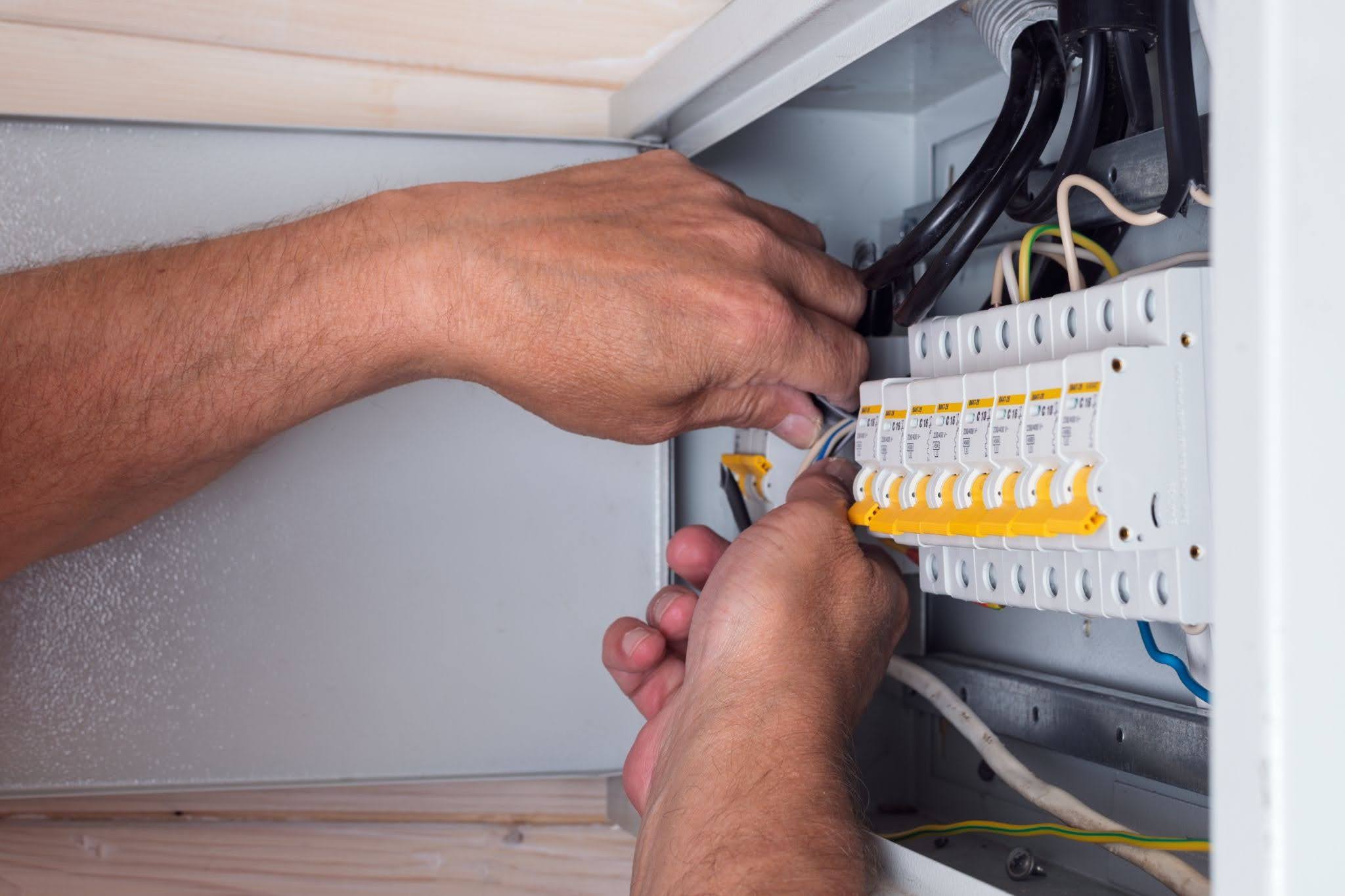
You probably don’t give your home’s electrical switchboard much of a second thought. And honestly, if everything is working as it should, you shouldn’t have to! It sits quietly in a cupboard, garage or utility area, keeping your home’s electrical system running safely in the background.
That is, until something trips. Suddenly, half the house goes dark, and you’re standing in front of the switchboard wondering which switch you’re supposed to touch. That’s when it pays to know your safety switches.
But what is a safety switch, what does one actually look like, and what should you do when it keeps tripping? More importantly, how do you know whether your home has enough protection? Here’s your crash course on safety switches, from what they do to when you might need a professional safety switch installation.
What is a safety switch?
A safety switch is a device fitted to an electrical circuit that monitors the flow of electricity. Whereas fuses and circuit breakers protect against short circuits and current overloads, a safety switch provides an additional layer of protection against electric shock. If it detects electricity escaping from the normal circuit, such as during a power surge, current leakage, or when a person comes into contact with faulty electrical equipment, it can switch off the power within milliseconds.
In other words, a safety switch is there to protect people from electrocution. But it’s worth noting that a safety switch can only protect the circuit it is connected to. Having one safety switch on your switchboard doesn’t necessarily mean every circuit in your home is protected, and one may not be enough.
What does a safety switch look like?
Not all safety switches look the same. Safety switches are also often labelled “Safety Switch”, although their appearance, size, and colour can vary between switchboards. The easiest thing to look for on your switchboard is a switch with a “T” or “Test” button.
You may have several safety switches on your electrical switchboard, each protecting different circuits. For example, one might protect power points while another protects lighting or another dedicated circuit. If you’re looking at your switchboard and still can’t work out which switches are safety switches, don’t start flicking random switches to find out!
A licensed electrician can identify which circuits are protected and whether your switchboard needs additional safety switches.
Safety switch vs. circuit breaker: what’s the difference?
Although safety switches and circuit breakers can look very similar and may even be installed side by side on the same switchboard, they are different. They have different roles and serve distinct purposes in keeping your home safe.
A circuit breaker protects an electrical circuit: it can trip when there is excessive current, such as from an overload or short circuit, helping prevent damage to wiring and electrical equipment.
A safety switch protects people: it monitors the electrical current and trips when it detects an imbalance that could indicate current is leaking somewhere it shouldn’t.
The two work together to provide broad electrical protection. One shouldn’t be treated as a replacement for the other; however, both are required in modern houses to meet safety and compliance requirements.
Should a safety switch be on or off?
A safety switch should be switched to the “on” position during normal operation. When the safety switch is in the on position, the circuit it protects can operate normally. If the switch is “off,” then that circuit won’t receive power.
On occasion, a safety switch may deliberately move to the off position when it detects a fault, but this is exactly what it’s designed to do. Normally, you can simply flip the switch back to its original position. But if the safety switch keeps flipping off, it is not random… There may be something else going on.
Repeated tripping is a warning sign, not just an inconvenience: a safety switch that keeps tripping could be responding to a faulty appliance, damaged wiring, moisture, or another electrical problem.
How to reset a safety switch
If your safety switch has tripped, you may be able to reset it yourself without touching any wiring or electrical components. Here’s how to reset a safety switch safely:
- Switch off or unplug appliances connected to the affected circuit where practical.
- Go to your switchboard and identify the safety switch that has moved to the off position.
- Move the switch firmly back to the on position.
- If it stays on, gradually reconnect or switch on appliances to identify which one is causing the problem.
- If the safety switch trips again immediately, leave it off and contact a licensed electrician.
WARNING: If you notice burning smells, scorch marks, sparks, damaged wiring, water around electrical equipment, or any other obvious safety hazard, DO NOT attempt to reset the switch yourself. If a safety switch won’t reset, you should contact a licensed electrician rather than attempting to fix the electrical problem yourself. Keep the power off, stay clear, and wait for a professional to assess the problem.
When do you need a safety switch installation?
If your home doesn’t have adequate protection, a safety switch installation service can be an important electrical safety upgrade. This is particularly worth considering in older homes, where electrical systems may not have been designed around the number of appliances and electrical equipment used today. You may also need to consider whether your existing safety switches cover all relevant circuits.
A switchboard could contain several circuit breakers and only a limited number of safety switches, meaning some circuits may not have the same level of protection. Safety switches can be installed to protect different circuits, including power points, lighting and dedicated equipment. Importantly, safety switch installation is not a DIY job.
Electrical work on your switchboard should be carried out by a licensed electrician who can assess your existing installation, determine which circuits require protection and ensure the work complies with applicable Victorian requirements.
Is your switchboard keeping up with your home?
Modern homes are asking more from their electrical systems than ever before.
Air conditioners, induction cooktops, electric hot water systems, EV chargers, solar systems and other high-demand appliances can all place greater demands on a home’s electrical infrastructure. That makes understanding your switchboard more important than ever.
If you’re unsure whether your home has adequate safety switch protection, don’t wait until something goes wrong. An electrician can inspect your switchboard, identify which circuits are protected, and recommend any necessary upgrades.
Upgrade your safety switches with Approved Electrix
Not sure which parts on your switchboard are safety switches? Or perhaps yours keeps tripping, and you’re not sure why? Our team can inspect your switchboard, troubleshoot electrical faults, and install safety switches professionally across Melbourne.
Get in touch with Approved Electrix to arrange an electrical inspection and make sure your home’s switchboard is providing the protection it should.
Get a quote for safety switch installation or upgrade today!