If you’ve ever looked up at your ceiling fan and wondered whether it’s spinning the right way, you’re not alone. Most ceiling fans have summer and winter settings, but knowing when to use each one can make a noticeable difference to your comfort and airflow. In summer, the right setting creates a cooling breeze, while winter mode helps circulate warm air that naturally rises towards the ceiling.
One of the best upgrades you can add to your home to help combat warm or stuffy rooms is installing a ceiling fan. For many Victorians, ceiling fans were once considered unnecessary in east coast or southern homes, but many homeowners have realised they’re effective and inexpensive climate-control tools. So if you’ve considered adding ceiling fans to your property, now is the time, since they help with comfort in both summer and winter!
The good news is that switching between the two is usually fairly simple. In this guide, we’ll explain which direction your ceiling fan should spin each season, how to change the setting, and how to use it effectively year-round.
Which Direction Should a Ceiling Fan Spin in Summer?
After your local residential electrician installs your new ceiling fan, it’s important to understand how it works. Specifically, you should familiarise yourself with which direction your fan ought to spin during which season
(Anticlockwise)
During the summer, your ceiling fan should spin counterclockwise, or anticlockwise. This means that when you look up at it, it should be spinning from right to left. By default, most ceiling fans are set to spin anticlockwise when installed, so check which direction yours is set to.
In summer, set ceiling fans to spin anticlockwise to push air straight down and create a cooling breeze. The anticlockwise rotation and the angle of the fan’s blades push air straight down. This should create a wind-chill effect, providing a direct, refreshing breeze that cools your skin, like you’re outdoors. The purpose is to help cool the room, but if it is still too hot inside, you can use air conditioning with a ceiling fan without losing comfort.
You can raise your air conditioner thermostat by a few degrees to boost the wind-chill effect from your ceiling fan while still enjoying a comfortable indoor temperature.
Ceiling Fan Winter Mode Explained
(Clockwise, Low Speed)
Most ceiling fans include a “winter mode”, which in reality doesn’t mean turning on any sort of cold function or anything like that. Instead, winter mode simply reverses the fan’s blade rotation to spin clockwise at a low speed. This helps pull cool air upward and push trapped warm air down the walls to heat the room evenly.
Winter mode refers to when you should use this setting. Warm air naturally rises and collects at the ceiling, even in colder months. The upward pull of the clockwise spin forces trapped heat outward and, ideally, warms the room. The key is running the fan on low speed so it circulates warm air without creating an unwanted wind-chill effect.
Winter mode in a ceiling fan won’t heat up your room, per se, but it can help make a cold room feel a bit more temperate.
How To Change Ceiling Fan Direction
Many modern ceiling fans offer multiple ways to change direction. Depending on the type of fan you have installed, you may have more than one way to change the direction it blows. Here are some common ways to change your ceiling fan’s direction.
DC Fans
The typical way to change a ceiling fan’s direction is right on the unit itself. There is usually a small switch located on the bottom or underside of the fan’s base that reads “Clockwise/Anticlockwise” or “Summer/Winter.” Turn your fan OFF, then toggle the direction you need.
Wall Switch
Most ceiling fans can be operated with a wall switch. There, you can control speed and dimmer lights. You may even be able to change the fan direction using the same wall switch!
If you want to add a wall switch to your ceiling fan setup, contact us to explore electrical renovation or house rewiring options.
Remote Control
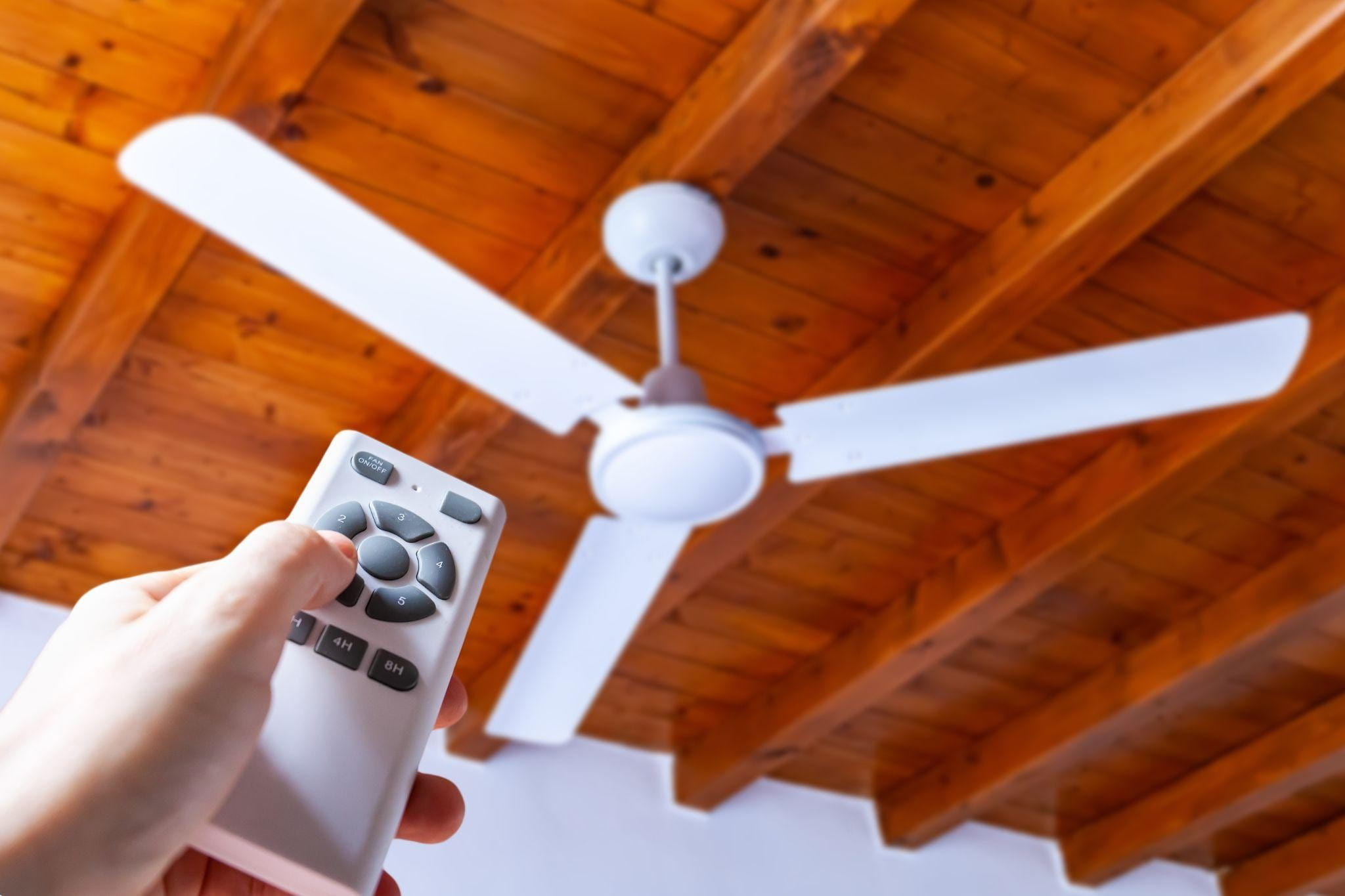
Some ceiling fans can also be operated by a remote control. They have the same functions as a wall switch, with the convenience of staying handy and nearby! Some remotes also let you change the spinning direction from the same place.
How To Tell Which Direction Your Fan Is Spinning
An easy way to remember which direction your fan is spinning is to think of it like a clock. If it spins to the right like a clock, it is in winter mode. If it spins to the left, or counterclockwise, that is summer mode.
Summer Mode: Ceiling fan direction in summer should be counterclockwise; it pushes air downward to create a direct, cooling wind-chill effect.
Winter Mode: Ceiling fan direction in winter should be clockwise on low speed; it pulls air upward to gently circulate trapped warm air down from the ceiling.
Is the ceiling fan direction myth real?
Some say that reversing the direction of your ceiling fan actually matters, that it’s a myth. But no, the ceiling fan direction rule is not a myth–it’s science! Changing the direction of your fan based on the season genuinely works to manage your comfort and energy use.
However, many people think this will dramatically change a room’s temperature. Reversing your ceiling fan doesn’t heat or cool a room’s air. Instead, it changes how air moves and how it feels.
Ceiling fans are ultimately passive climate-controlling tools, but they do not heat or cool. For extreme heat or cold, installing split-system air conditioning is an option.
FAQs
What is the difference between summer and winter mode?
Summer mode pushes cool air down into the room, creating a breeze that helps you feel more comfortable in warmer weather. Winter mode reverses the fan direction, gently drawing air upwards and circulating the warm air that collects near the ceiling back through the room. Both modes can help maintain a more even temperature without running the fan at high speed or relying on air conditioning or heating.
What does the reverse function do?
The reverse switch alters your ceiling fan’s blade rotation direction. During warmer months, running it anticlockwise pushes air straight down to deliver a cooling wind-chill effect. Switching to the reverse setting in winter lets the fan gently draw air upward, redistributing trapped heat evenly across the room without creating an uncomfortable draft. Utilising this function helps optimise airflow and year-round indoor comfort.
How much energy can you save by using it in Australia?
Energy savings from running a ceiling fan depend on the unit, room size, weather conditions, and how often you run heating or air conditioning. Ceiling fans use far less electricity than split systems, so pairing them with your cooling helps reduce power use. In winter, setting the fan to reverse circulates trapped heat evenly throughout the room, easing the load on your heater.
For Australian households, using ceiling fans alongside moderate thermostat adjustments and proper insulation offers a practical approach to keeping comfortable without driving up energy bills.
Be Ready for Every Season with Ceiling Fans Installed by Approved Electrix
Switching your ceiling fan between summer and winter modes is a simple way to improve airflow and comfort year-round. If your fan isn’t working as it should, or you’re considering a new installation, Approved Electrix can help. We specialise in installing, repairing, and upgrading ceiling fans in Melbourne homes.
For professional advice and installation, contact the team today for a quote and a more comfortable home and a cheaper electricity bill.